There was a time in America when Christianity was inseparable from education. In fact, a person needed to be educated to access a proper understanding of the word of God. In the early colonies, the Christian minister was often the most educated person in town—reading Greek and Latin and studying theology as a rigorous discipline. Sermons were not designed to appeal to emotion, but to stretch the mind as much as the soul.
According to Richard Hofstadter in Anti-Intellectualism in American Life, early American universities existed largely to study theology. Institutions such as Harvard, Yale, and Princeton were religious institutions that took the intellect seriously. A minister who could not reason, and who based his understanding of God solely on intuition, was simply not trusted.
“Salvation no longer came through understanding doctrine or wrestling with scripture. It came through personal experience, intuition, or by making a considerable donation.”
As the country expanded westward, towns formed faster than schools, and formal education became rare on the frontier. During the revivals of the early nineteenth century, a new Christianity emerged based on emotion and “divine callings” rather than seminary study. Emotion proved more powerful than reason; a preacher who could move a crowd became more successful than one who could explain Augustine. Over time, critical thinking itself began to look blasphemous.
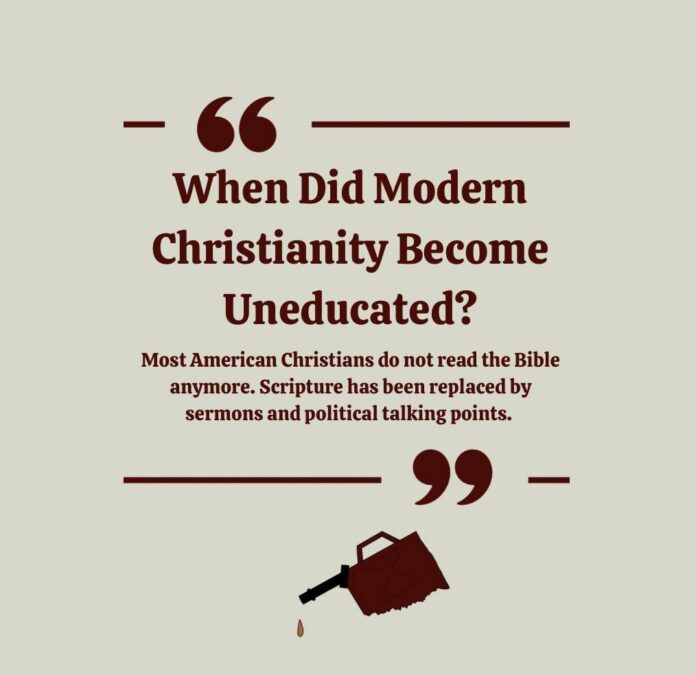
By 2025, the worst outcome imaginable has become reality. Many American Christians no longer engage deeply with reading at all, replacing scripture with sermons and political talking points. The word of God is now filtered through pastors, influencers, and politicians who reshape it to fit their agenda or their pockets.
If you are a Christian, read the Bible for yourself. Outsourcing your faith to politicians makes Jesus sad. Thank you for reading.

